
Short Answer
If you want to influence buyers in 2025, start by understanding how people feel, not just what they think. That’s the core of psychology marketing. It’s about using emotional and behavioral insights to guide decision-making, build trust, and improve conversions.
People rarely buy based on logic alone. Whether it’s a limited-time offer, a glowing review, or a product that “just feels right,” those moments are shaped by consumer psychology and buyer behavior. The most effective marketing today doesn’t push harder, it connects smarter.
So how do you actually influence buyers?
Use proven psychological principles like social proof, scarcity, personalization and more. Combine them with ethical strategies that respect your audience. And most importantly, understand the changing consumer trends in 2025, especially how Gen Z and AI are reshaping attention, expectations, and trust.
Key Takeaways:
- Psychology marketing works by aligning your message with how people actually decide.
For a comprehensive understanding of psychology marketing, let’s dive deeper. By the time you finish this article, we both hope all your questions will be answered.
Consumer Trends & Behavioral Shifts in 2025
Consumers in 2025 are sharper, faster, and more selective than ever. The old marketing playbook such as discounts, flashy ads, aggressive CTAs, etc, doesn’t cut it anymore. To reach today’s buyers, you need to understand how their behavior has changed, and why.
First, you need to know that people nowadays have shorter attention, but their expectations are higher. Thanks to endless scrolling and personalized feeds, people are conditioned to expect relevance instantly.
If your message doesn’t connect in the first few seconds, they’re gone. That’s where behavioral marketing becomes essential, by tracking real user behavior (not just demographics), brands can deliver the right message at the right moment.
Second, buying decisions are driven by trust and identity. People don’t just buy products, they buy stories and communities. Gen Z in particular leans heavily into social impact and emotional resonance. Brands that feel distant, corporate, or overly polished tend to get ignored.
Third, AI and algorithms are shaping how choices are made. Consumers are being shown fewer options, more often filtered by behavior patterns. That means brands have to be strategic, not just loud. Emotional tone, timing, and subtle triggers are now part of the buying journey, whether you’re aware of it or not.
Lastly, consumer psychology is no longer about “tricking” people, now it’s about aligning your message with how the human brain naturally processes information. Scarcity, urgency, and social proof still work, but only when used with authenticity.
Key Takeaways:
- Buyers in 2025 don’t want to be sold to, but they want to be understood.
- Identity, emotion, and trust shape purchasing decisions more than price.
- Psychology marketing must adapt to new behaviors shaped by AI and shifting social values.
Key Principles of Psychology Marketing
If you want to influence how people buy, you have to understand how they think, and more importantly, how they feel. That’s what psychology marketing is really about. It’s about applying psychological principles that align with how the human brain makes decisions.
Let’s walk through five of the most effective principles that continue to shape buyer behavior in order to increase sales, especially in 2025.
1. Social Proof: People Trust People
Humans are wired to follow the crowd. When we’re unsure about a choice, we look to others for signals. That’s why online reviews, testimonials, case studies, and influencer content work so well, they reduce friction and build trust instantly.
But here’s the key in 2025: people want authentic proof, not just high ratings. They want to see people like them. What did a similar customer say? How did the product fit their lifestyle? This isn’t just about quantity (like “2,000 reviews”), it’s about relevance.
Use social proof to answer the unspoken question: “Will this work for someone like me?”
2. Scarcity and Urgency: The Fear of Missing Out Is Real
Limited-time offers. “Only 2 left.” Countdown timers. These tools work because they tap into loss aversion, the fear of missing out on something valuable. Scarcity creates tension. Urgency makes people act faster.
But here’s the thing: in 2025, buyers are smarter. Fake urgency? They’ll spot it and lose trust. Use scarcity when it’s real. If you’re offering something limited, say so and show proof. Combine this with behavioral cues, like how many people viewed the product in the last hour, to make the urgency feel grounded in truth.
3. Reciprocity: Give Before You Ask
When you provide value first (whether that’s a free resource, helpful email, or useful tool), people naturally feel more open to giving something back, like their time, attention, or even a purchase.
This principle works especially well in behavioral marketing, where you guide users step-by-step through a helpful journey before making a pitch. For example, a mini-guide that solves a specific problem can build enough goodwill to justify the next offer and boost conversions without hard selling.
4. Anchoring: First Impressions Shape Value
The first number someone sees sticks. That’s the idea behind price anchoring. If you’re selling a $99 product, and show a $149 version first, suddenly $99 feels like a deal even if you haven’t discounted anything.
Smart use of price structure, comparisons, and packages can change perception without changing the product. Anchoring is a simple but powerful way to reframe expectations.
5. Loss Aversion: We Hate Losing More Than We Love Winning
People are more motivated to avoid a loss than to gain a benefit. Instead of only saying “Here’s what you get,” try highlighting what they’re at risk of losing by not taking action on time, opportunity, simplicity, or even peace of mind.
This taps directly into consumer psychology, and it’s especially effective when combined with time sensitivity or social proof. It gives people that extra emotional nudge to move forward.
Key Takeaways:
- psychology marketing isn’t about manipulating buyers. It’s about understanding what truly matters to them
- Social proof, scarcity, reciprocity, anchoring, and loss aversion still shape how buyers decide.
- Authenticity matters more than fake urgency or fake reviews, they do more harm than good.
- Combine timeless principles with behavioral data for maximum relevance and impact.
Emotional Triggers in Marketing
Logic makes people think. Emotion makes them act. That’s why some of the most effective marketing campaigns don’t rely on features or specs, but they rely on how the message makes someone feel.
In psychology marketing, emotional triggers are powerful tools. They help bridge the gap between attention and action, turning passive interest into genuine motivation.
Let’s break down a few of the most commonly used emotional triggers and why they still work in 2025.
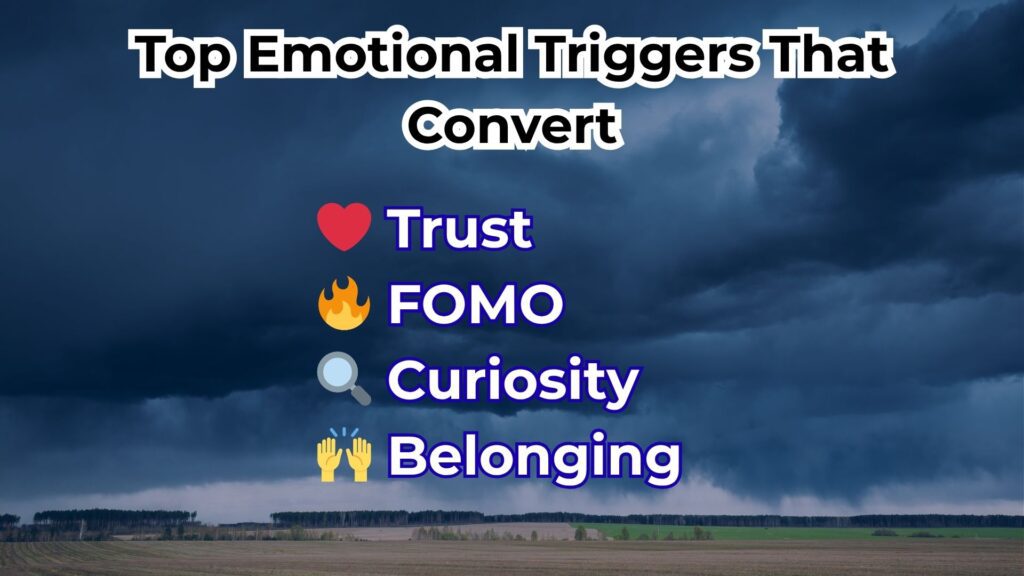
Fear of Missing Out (FOMO)
FOMO isn’t just a trend, it’s rooted in basic human psychology. When people see others buying something, signing up, or benefiting from an offer, they don’t want to be left behind.
This is why limited-time offers, social proof, and “Only X left in stock” messages can be so effective. The goal isn’t to pressure but to remind the buyer that opportunities do expire.
Trust and Safety
Especially in 2025, where scams and data misuse are common concerns, people are more cautious with their money. They want to feel secure before clicking “Buy”.
Triggering a sense of safety means showing transparency: refund policies, customer reviews, certifications, and even clear design. The more comfortable a buyer feels, the more likely they’ll convert.
Belonging and Identity
People often buy products that reflect who they want to be or who they already are. This is where behavioral marketing becomes valuable.
When your messaging matches the values or aspirations of your audience (eco-conscious, high-performance, minimalist, etc.), you’re no longer just selling a product. You’re inviting someone to be part of something that fits their identity.
Excitement and Curiosity
Sometimes, buyers just need a spark such as something unexpected, bold, or entertaining. Using humor, mystery, or “what’s next?” storytelling can grab attention and make a message stick.
In the end, marketing that speaks to emotion leaves a stronger impression than one that simply lists features.
Key Takeaways:
- Emotion drives action, logic just supports the decision afterward.
- FOMO, trust, belonging, and curiosity are some of the strongest emotional triggers.
Psychological Tricks & Persuasive Techniques
Let’s be clear upfront, we’re not talking about manipulation. The goal of persuasive marketing isn’t to trick people into buying things they don’t need. It’s to communicate value in a way that aligns with how people naturally think and make decisions.
But if they buy something they don’t need after our persuasion, then it’s on them.
In 2025, effective persuasion is about subtlety, relevance, and timing. These psychological tricks in marketing aren’t “sneaky hacks”, they’re techniques grounded in behavioral science that help people move from hesitation to action, ethically.
Here are some of the most practical and proven ones you can use.
1. The Power of the First Choice (Priming)
The first offer, message, or visual someone sees sets the tone. It becomes the reference point for everything that follows even if it’s irrelevant.
This is why many landing pages start with a premium option or bold promise. It creates a sense of expectation. Everything else feels more reasonable or desirable by comparison.
Use this in product tiers, pricing pages, or even in emails will lead with strength.
2. Micro-Commitments
Getting someone to say “yes” starts small. Instead of pushing for the sale right away, start with a soft action: downloading a guide, clicking a quiz, or watching a 30-second video.
These small actions build momentum. Each “yes” increases the likelihood of the next one, a classic behavioral marketing approach rooted in the foot-in-the-door principle.
3. Specificity Over Generalities
“Get better results” sounds nice. But “Increase conversions by 23% in 14 days” feels real.
When you’re specific with numbers, timeframes, or concrete benefits, then your message becomes more believable. Vague claims trigger doubt. Specific ones trigger trust.
Even when using soft benefits (like “peace of mind”), try tying them to specific experiences or outcomes.
4. The Zeigarnik Effect
People tend to remember and act on incomplete tasks. That’s why showing a progress bar, a checklist, or even “Step 1 of 3” in your onboarding process works so well.
This taps into the natural urge to finish what’s been started. If your process feels unfinished, people are more likely to come back or keep going.
5. Dual-Purpose CTAs
A “Buy Now” button is a decision. A “Learn Why Buyers Trust Us” button is a low-stakes next step.
Use call-to-actions (CTAs) that serve both your goal and the buyer’s curiosity. Offering choices like “Compare Plans” or “See Results” respects the buyer’s process while still moving them forward.
These techniques work best when combined with insights from psychology marketing, not as isolated tactics, but as part of a bigger strategy that respects the buyer’s mindset.
When done right, persuasive marketing doesn’t feel like persuasion at all. It feels like clarity.
Key Takeaways:
- Effective persuasion builds on how people process choices, not on pressure.
- Techniques like priming, micro-commitments, and Zeigarnik Effect guide buyers naturally.
Neuromarketing Techniques That Work
If psychology marketing looks at how people behave, neuromarketing goes one level deeper, it looks at how the brain responds.
Neuromarketing techniques are built on neuroscience: studying brain activity, eye movement, and emotional response to marketing stimuli. While you don’t need an fMRI machine to use these strategies, understanding how the brain reacts to visual and sensory inputs can give you a serious edge.
Here are a few principles and techniques that consistently improve engagement, retention, and conversions.
1. Visual Hierarchy and Eye Tracking
Our brains don’t read, they scan. Studies using eye-tracking show that people follow predictable patterns when viewing content online: top to bottom, left to right, in an F-shaped or Z-shaped pattern.
To work with this, structure your pages with strong visual hierarchy:
- Put key messages where the eye lands first (top left or centered above the fold)
- Use contrasting colors to draw attention to CTAs
- Break up content with subheadings and white space
Neuromarketing is about guiding the brain.
2. Emotional Imagery
People respond to faces. Especially faces showing emotion.
Images of real people, making eye contact or displaying feelings like joy, relief, or anticipation, tend to hold attention longer and increase emotional connection.
This matters whether you’re running ads, designing landing pages, or crafting social content.
Stock photos don’t cut it anymore. Go real, go human.
3. Color Psychology
Colors affect perception and mood. Red can signal urgency, blue builds trust, yellow grabs attention. But context matters.
In neuromarketing, color use is always intentional. A bold CTA in orange might work well on a clean page but fail on a cluttered one. The goal is to match emotional tone with brand message, not just follow color “rules.”
Test what works for your audience. Perception is emotional, not universal.
4. Audio and Rhythm
Sound plays a bigger role than most marketers realize. Even subtle background music or tone in a voiceover can trigger emotion, build suspense, or calm nerves.
If you’re using video or interactive content, don’t ignore sound design. It shapes memory and mood more than visuals alone.
Neuromarketing techniques don’t guarantee instant conversions, but they create experiences that feel intuitive, natural, and emotionally aligned. That’s what makes people stay, engage, and trust.
Key Takeaways:
- Neuromarketing works by aligning with how the brain processes visuals, emotion, and sound.
- Small details like layout, imagery, and color can shape how people feel about your brand.
- Great marketing isn’t just about seen, but also about felt.
Applying Psychology in Digital Marketing Channels
Knowing psychological principles is one thing but applying them where it matters is what drives results. And in 2025, that means using psychology strategically across the digital channels your audience actually engages with: websites, emails, ads, and social platforms.
Here’s how to bring psychology marketing to life in practical, channel-specific ways, with a focus on how real buyers behave online.
Website & Landing Pages: First Impressions Are Everything
Your website is often the first place buyers form opinions and most of those impressions happen within seconds.
Use visual hierarchy and emotional cues to guide attention. Place your main value proposition high and clear, use human-centric imagery, and keep your CTAs visible but not pushy.
Trust signals like testimonials, reviews, and security badges should be strategically placed near conversion points.
Incorporate loss aversion and scarcity messaging when it makes sense, like “Offer ends tonight” or “Only 3 spots left”, but remember to be genuine.
Email Marketing: Timing and Frictionless Action
Email remains one of the highest-ROI channels, but only when done right.
Subject lines should use curiosity or urgency without sounding like clickbait. The first line of copy should reinforce relevance. And CTAs should be crystal clear and emotionally framed (e.g., “See how others solved this too” instead of just “Click here”).
Using micro-commitments is especially effective here: ask for small actions (like reading a tip, replying to a question) to build engagement over time. This taps directly into behavioral marketing by guiding people through a low-pressure journey.
Social Media & Paid Ads: Fast, Personal, and Emotional
Social media is where emotional triggers shine. Use FOMO, social proof, and identity alignment to grab attention quickly.
In 2025, short-form video and scroll-stopping visuals are key, but message clarity matters just as much. A great ad doesn’t just look good, it also says something meaningful in under five seconds.
Retargeting ads work best when they reflect digital marketing consumer behavior, like what someone viewed, clicked, or abandoned. Tailor the message to where they are in the buying journey.
E-commerce & Conversion Flows: Reduce Cognitive Load
In online stores, less friction = more sales.
Apply anchoring in pricing displays (“Most Popular” tags, side-by-side comparisons), and use progress indicators during checkout. Include visuals that trigger trust (people using the product) and highlight what they’d lose if they don’t act now like limited-time deals, free shipping, or availability.
Every decision point should feel easy and safe.
Psychology isn’t a feature, it’s the foundation of effective communication across all platforms.
Key Takeaways:
- Tailor psychological tactics to fit each channel’s natural behavior and user expectations.
- Use digital marketing consumer behavior insights to personalize timing, tone, and format.
- Emotional clarity, low friction, and trust cues drive better outcomes everywhere.
Ethical Considerations in Psychological Marketing
Let’s be honest, psychology is powerful! It can shape opinions, nudge decisions, and even override logic. That’s exactly why psychological marketing needs boundaries.
Influence becomes dangerous when it crosses the line into manipulation. And in 2025, with growing consumer awareness and stricter data regulations, the way you use psychology isn’t just a creative choice, it’s a trust issue.
So what does ethical psychological marketing look like?
1. Influence, Not Deception
- Using scarcity? Make sure it’s real.
- Showing testimonials? Don’t invent them.
- Promising results? Avoid exaggerated claims.
There’s a clear difference between highlighting value and distorting the truth. Ethical marketing focuses on helping people make informed decisions, not pressuring them into buying things they’ll regret later.
Trust is fragile, and in the age of online reviews and public backlash, one bad experience spreads quickly.
2. Respect for Autonomy
One principle that often gets overlooked is consumer autonomy, the ability for someone to say yes or no freely. If your funnel traps, manipulates, or rushes people into decisions (e.g., fake timers, “you can’t exit until…” pop-ups), you’re not persuading but coercing.
Respect means creating space for choice. It also means offering clear opt-outs, transparent pricing, and honest expectations.
3. Data-Driven, Not Emotionally Exploitative
Modern behavioral marketing clearly relies on tracking data, but how you use that data matters. It’s one thing to show a reminder about a product someone viewed. It’s another to trigger anxiety, shame, or guilt to force a purchase.
The best brands in 2025 win not because they push the hardest, but because they respect the buyer’s psychology and values. They lead with empathy and clarity.
Ethical doesn’t mean ineffective, it means sustainable for our customers.
4. Know Your Audience Boundaries
Some audiences (like younger users, those in distress, or marginalized groups) require an even higher ethical standard. If your marketing exploits emotional vulnerability, you’re not just risking reputation, you’re doing harm to them.
Key Takeaways:
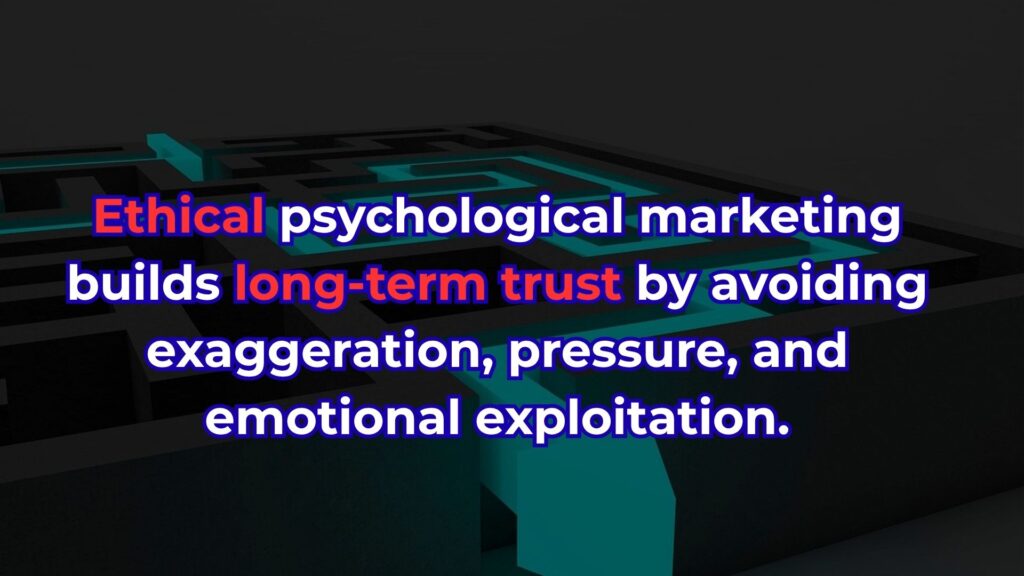
- Ethical psychological marketing avoids exaggeration, pressure, and emotional exploitation.
- Building long-term trust is more powerful than quick wins.
- Influence works best when it’s paired with honesty, empathy, and transparency.
Conclusion
Psychology marketing is a strategy that applies principles of human behavior and cognitive psychology to influence how consumers think, feel, and make decisions. It’s not about manipulation, it’s about understanding the real motivations behind why people say “yes.”
In 2025, this matters more than ever. Buyers are flooded with choices, but they gravitate toward brands that feel relevant, trustworthy, and emotionally in tune. That’s why techniques like emotional triggers, behavior-based targeting, and neuromarketing aren’t “extra.” They’re essential.
What separates effective marketers from forgettable ones isn’t just tools or tactics. It’s the ability to connect with people, to design experiences that align with how real humans make choices. And that’s what psychology marketing enables.
Done right, it doesn’t just influence action, it builds loyalty, creates clarity, and leaves a lasting impression.
Frequently Asked Questions (FAQ)
1. What is the difference between psychology marketing and behavioral marketing?
Psychology marketing focuses on the emotional and cognitive factors behind decision-making, while behavioral marketing uses past actions (like clicks, views, or purchases) to guide marketing strategies. Psychology explains why people act; behavioral data shows what they did.
2. Is psychology marketing ethical to use in small businesses?
Yes, as long as it’s transparent and respectful. Small businesses can use psychological principles to guide design, messaging, and offers without pressuring or deceiving customers. It’s about clarity, not coercion.
3. Do I need a psychology background to apply these techniques?
Not at all. You just need to understand the basics: emotional triggers, buyer behavior, and how people process choices. Even simple adjustments to copy, layout, and timing can make a huge difference.
4. What are examples of emotional triggers in marketing?
Common examples include FOMO (Fear of Missing Out), trust signals (like reviews), a sense of belonging, and curiosity. These emotions help capture attention and move people to act, especially when used with empathy.
5. How can I know if my marketing is psychologically effective?
Track real behavior. Look at click-throughs, scroll depth, bounce rate, and conversions. But also listen: if people say your message “just made sense” or “felt right,” you’re likely aligning with how they think and feel.
Let’s Talk
Want to explore how psychology can improve your digital marketing?
Whether you have questions or want advice tailored to your business, we’re here to help.
📩 Email me anytime at info@rhaskodigital.com — no pressure, just clarity.
Let’s make your message connect for real.