

What You Will Learn From This Case Study
This article examines whether long-form SEO content still has a structural advantage in Google rankings by analyzing real SERP behavior through a controlled SEO case study 2026.
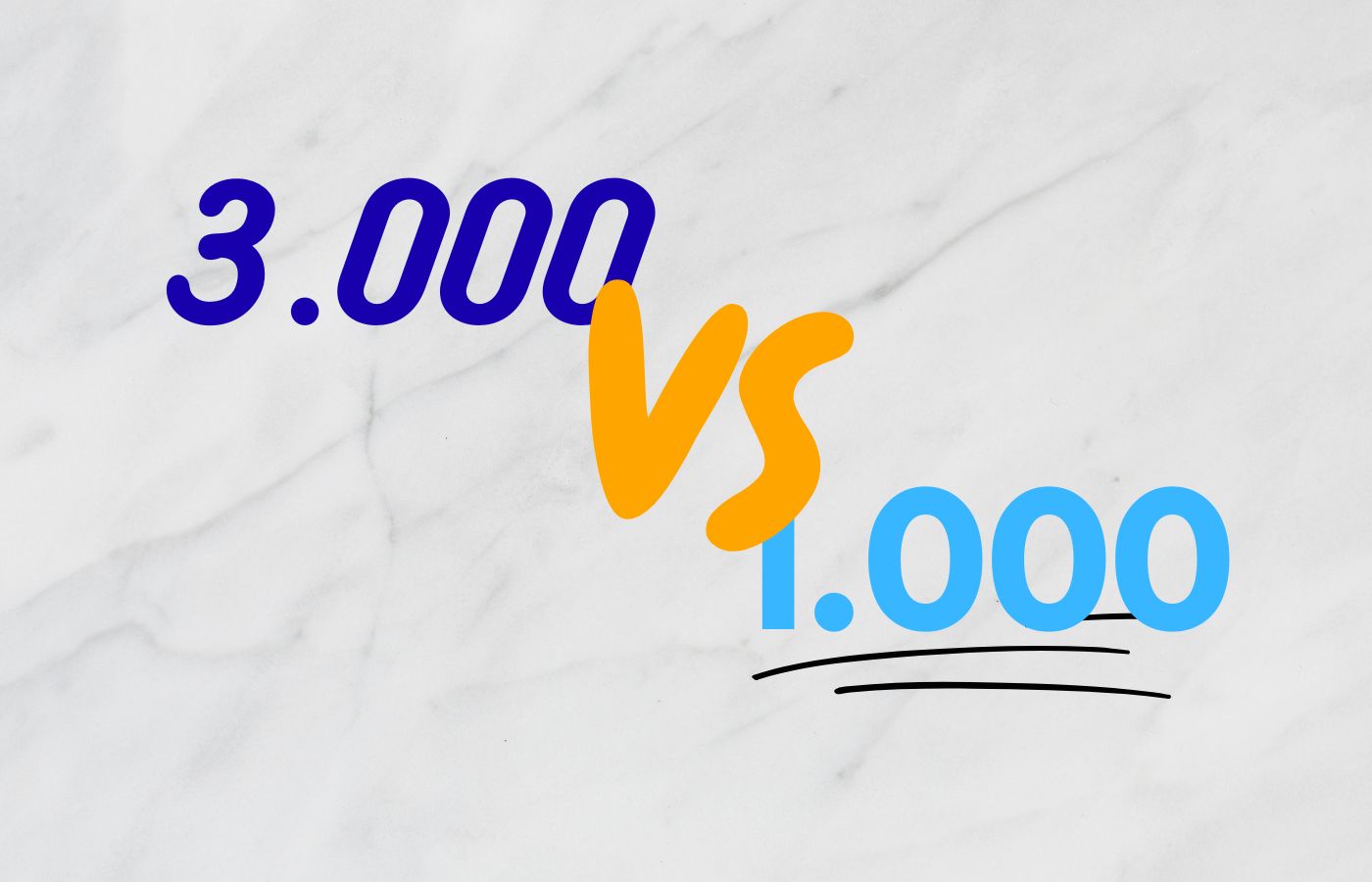
Before investing time and budget into producing 3,000-word articles, it is worth asking a practical question: does length itself drive visibility, or does Google prioritize something more precise?
In this case study, you will see:
- How Google People Also Ask ranking reflects answer selection, not just page authority
- Why a 1,000-word article appeared above longer content in the same query environment
- What passage ranking Google means for how you structure conclusions and definitions
- How the discussion connects to the shift from traditional SEO toward AEO vs GEO
- What this means for businesses allocating budget to long-form SEO content
If you are building a content strategy for growth, this analysis will help you avoid overproducing content that looks impressive but fails to earn answer visibility.
Read the full case study to understand how structural precision may matter more than word count in modern search.
The Long-Form Content Assumption in Modern SEO
Long-form SEO content is widely assumed to perform better in search because it signals depth, authority, and topical coverage.
For more than a decade, marketers have operated under a simple model: longer articles cover more subtopics, include more keywords, and therefore rank higher. This belief became embedded in content strategy playbooks, editorial briefs, and agency deliverables.
In many organizations, 2,500 to 3,000 words became the informal benchmark for competitive queries.
The logic appears sound on the surface. Longer content can address multiple related questions, improve internal linking opportunities, and reduce thin coverage. Search engines have also consistently emphasized comprehensive information. As a result, long-form SEO content became shorthand for quality.
However, this assumption blends two different concepts: topical completeness and answer selection. A page can be comprehensive without having a clearly extractable answer.
When a query triggers Google People Also Ask ranking features, Google is not rewarding the most expansive article. It is selecting the clearest answer passage.
This distinction matters. If a 3,000-word article buries its core definition in a dense introduction, while a 1,000-word article states it clearly in a structured conclusion, the shorter page may supply the answer snippet.
The debate is not whether long-form SEO content works. The real question is whether length itself is the competitive edge, or whether structure and answer clarity determine visibility within modern SERP features.
Key Takeaways
- Long-form SEO content became popular because it signals depth and topical coverage.
- Length alone does not guarantee selection in Google People Also Ask ranking features.
- The difference between comprehensive content and extractable answers is critical in modern SEO.
Research Setup – A Real SEO Case Study 2026
This SEO case study 2026 was conducted to observe how Google selects answers inside People Also Ask for the query “AEO and GEO.”
The objective was not to measure traffic, backlinks, or domain authority. The focus was narrower and structural: which passages does Google extract, from which sections of an article, and how does article length relate to PAA placement?
Research parameters:
- Primary query: “AEO and GEO”
- Location: Indonesia, Jabodetabek region
- Date: 3 February 2026
- Device: Standard desktop search environment
- Observation target: Google People Also Ask ranking hierarchy
The analysis examined three domains that appeared within the PAA box. Each article was reviewed to identify:
- Total word count
- Section source of the extracted answer
- Nature of the question served in PAA
- Relative position within the PAA stack
Importantly, this was an observational SERP study. It does not claim algorithmic causation. Instead, it documents visible ranking behavior at the time of analysis. No third-party SEO tool data or provider statistics were used. All findings are based on direct SERP observation and on-page content review.
This controlled framing allows us to evaluate a specific claim: whether long-form SEO content inherently dominates answer extraction within PAA environments.
What Google’s People Also Ask Ranking Revealed
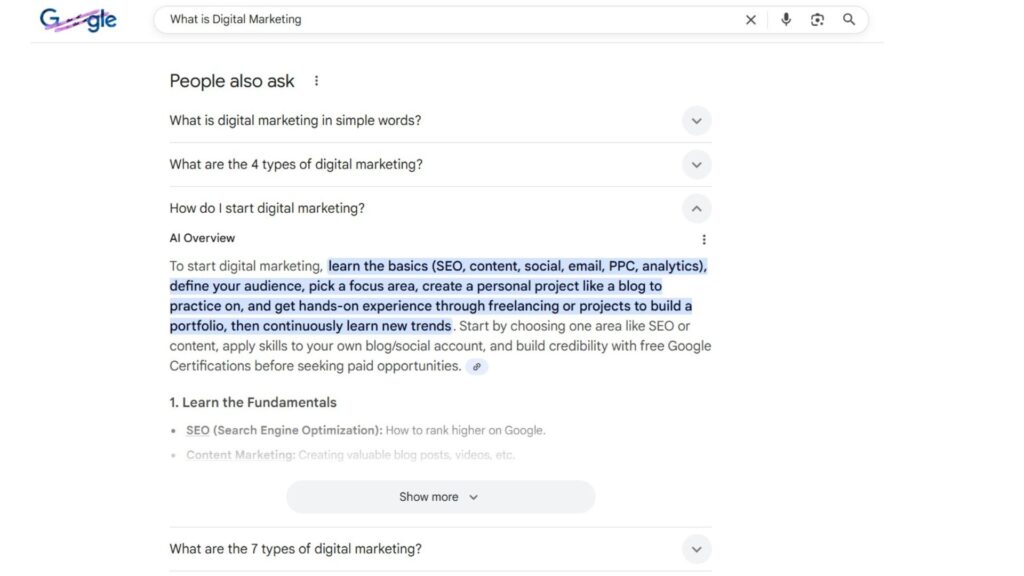
The Google People Also Ask ranking for “AEO and GEO” showed that a shorter article supplied the top answer passage, while longer articles appeared lower in the PAA hierarchy.
In the observed SERP, three domains appeared within the PAA stack. Their relative positions and structural characteristics revealed a clear pattern:
- Position #1 in PAA: approximately 1,000 words, answer extracted from the conclusion section
- Mid-level PAA position: approximately 2,000 words, answer extracted from the introduction
- Lower PAA position: approximately 1,200 words, answer extracted from a closing summary section
The key variable was not total word count. Instead, the determining factor appeared to be how directly the passage answered the specific question displayed in the PAA box.
The top PAA result addressed a comparative question about AEO vs GEO with a concise, declarative paragraph. The answer was structurally self-contained. It required no surrounding context to make sense. That clarity makes passage extraction easier.
By contrast, the longer article provided broader conceptual framing in its introduction. While informative, the extracted segment was more explanatory than definitive. It functioned as context rather than a direct answer.
This supports an important distinction in modern search behavior: Google is not ranking pages inside PAA. It is selecting passages. Passage ranking Google enables the system to identify a specific block of text that best resolves the question, regardless of article length.
For long-form SEO content, this has direct implications. If the core definition or comparison is diluted across multiple paragraphs, the page may rank organically but fail to dominate Google People Also Ask ranking visibility.
Key Takeaways
- The highest PAA position was occupied by a shorter article with a clear conclusion-based answer.
- Passage ranking Google prioritizes extractable clarity over total word count.
- Long-form SEO content must be structurally precise to compete inside PAA features.
Why a 1,000-Word Article Ranked Above Longer Content
A 1,000-word article ranked above longer competitors because it delivered a concentrated, self-contained answer that aligned precisely with the PAA query.
The winning passage did not attempt to educate broadly before answering. It stated the distinction between AEO vs GEO directly, using a clear declarative structure. The paragraph could stand alone without requiring readers to interpret surrounding commentary. That structural clarity increases extractability.
Longer articles often aim for comprehensive coverage. They include background context, layered explanations, and multiple subtopics.
This approach supports topical authority. However, when a question inside Google People Also Ask ranking demands a focused comparison or definition, comprehensiveness can introduce friction.
In this case, the shorter article concentrated its answer in a single section near the end. The conclusion functioned as an answer consolidation zone.
It summarized the core distinction in simple, unambiguous language. From a passage ranking Google perspective, that section presented a clean extraction target.
This does not mean long-form SEO content is ineffective. It means that without structural compression at critical points, longer pages risk diluting answer density. When the algorithm evaluates passages rather than entire pages, clarity per paragraph becomes a competitive variable.
The implication is structural, not ideological. Precision can outperform expansion when the search environment prioritizes direct answers.
Key Takeaways
- The shorter article succeeded because its answer was structurally self-contained.
- Passage ranking Google favors concentrated answer density over narrative expansion.
- Long-form SEO content must isolate definitive statements to compete in PAA environments.
1. The Role of Passage Ranking in Modern Search
Passage ranking Google enables the algorithm to evaluate and surface specific sections of a page independently from the page as a whole.
Google introduced passage-based indexing to improve its ability to match nuanced queries with deeply buried information inside longer documents. The practical outcome is simple: a single paragraph can compete even if the overall page is not the shortest or most optimized.
In the observed SERP, the selected PAA answers were not entire articles. They were discrete text blocks. This distinction changes how long-form SEO content should be structured. The algorithm is not rewarding volume. It is scanning for semantic completeness within a confined space.
A strong passage typically contains three characteristics:
- A direct definition or comparison in the first sentence
- Clear subject alignment with the query
- Minimal dependency on preceding paragraphs
When these conditions are met, extraction becomes straightforward. If a passage requires transitional language such as “as mentioned earlier” or relies on contextual buildup, its eligibility for Google People Also Ask ranking may decrease.
Passage ranking Google shifts optimization from page-level thinking to paragraph-level engineering. For businesses producing long-form SEO content, this means structural clarity must exist at the micro level, not only across the entire article.
2. Conclusion as a Ranking Asset
The conclusion section can function as a high-value extraction zone because it consolidates key insights into compact, declarative statements.
In many long-form SEO content pieces, the conclusion is treated as a summary for human readers. From a structural perspective, it can serve a second function: answer compression. When properly written, it restates the central argument in its most distilled form.
In the observed SERP case, the highest-ranking PAA answer was sourced from a conclusion paragraph. The language was direct. It did not introduce new ideas. It clarified the distinction in a few tightly structured sentences.
That density increases eligibility for Google People Also Ask ranking because the system favors passages that resolve intent immediately.
A strong conclusion suitable for passage extraction typically:
- Restates the primary definition or comparison clearly
- Avoids rhetorical questions or promotional language
- Uses declarative syntax rather than narrative transitions
For example, a sentence structured as “AEO focuses on optimizing direct answers, while GEO centers on influencing generative outputs” is structurally stronger than a reflective or exploratory closing paragraph.
This does not mean every conclusion will be extracted. It means that the conclusion is often the most concentrated part of a well-structured article. When engineered intentionally, it becomes an asset rather than a formality.
In competitive environments, especially where AEO vs GEO discussions are evolving, the ability to compress meaning into a clean, extractable summary can influence visibility within PAA.
AEO vs GEO and the Shift Toward Answer Selection
The rise of AEO vs GEO reflects a broader shift in search from ranking pages to selecting answers.
Traditional SEO focused on improving page visibility in organic listings. The core objective was to move a URL higher in the ranking order.
That model still matters, but search interfaces increasingly prioritize direct responses through features such as Google People Also Ask ranking and AI-generated summaries.
AEO, or Answer Engine Optimization, centers on structuring content so it can be extracted as a definitive response. GEO, or Generative Engine Optimization, expands this concept to AI-driven systems that synthesize answers rather than link to pages. In both cases, clarity and structural precision become primary variables.
The observed SEO case study 2026 illustrates this transition. The winning passage was not the most comprehensive page. It was the clearest answer unit. This aligns with answer-first environments where systems evaluate semantic completeness at the passage level.
For businesses investing in long-form SEO content, this shift changes how value is created. Authority alone is insufficient. Content must be engineered to function in two modes:
- As a complete article for human readers
- As modular answer blocks for extraction and synthesis
When discussions around AEO vs GEO intensify, the competitive edge will belong to brands that design content with answer selection in mind. The question is no longer only “Can this page rank?” but also “Can this paragraph be selected?”
Key Takeaways
- AEO vs GEO represents a structural shift toward answer extraction and synthesis.
- Passage ranking Google supports answer-level visibility, not just page-level ranking.
- Long-form SEO content must be designed for both readers and answer engines.
What This Means for Businesses in 2026
Businesses in 2026 must treat long-form SEO content as a structural asset rather than a word-count benchmark.
The debate now is about redefining how they are engineered. A 3,000-word piece can still perform well in organic search, but only if it contains extractable answer units that align with how passage ranking Google evaluates content blocks.
This SEO case study 2026 demonstrates a practical shift. Visibility inside Google People Also Ask ranking is influenced by precision. If your definition, comparison, or framework is buried inside narrative exposition, you reduce its eligibility for selection.
For decision-makers allocating marketing budgets, this has direct implications:
- Content production should prioritize clarity before expansion
- Editorial briefs should require explicit answer blocks under relevant headings
- Conclusions should restate core distinctions in declarative form
- Technical and strategic articles should be written with AEO vs GEO environments in mind
Long-form SEO content still supports authority, internal linking depth, and topical coverage. However, without structural discipline, length becomes cosmetic.
In competitive digital markets, the advantage will not belong to the brand that publishes the longest article. It will belong to the brand that designs content capable of being selected, extracted, and cited across search interfaces.