
What Is Off-Page SEO?
Off-page SEO refers to all the actions you take outside your own website to improve its position in search results.
Unlike on-page SEO, which you fully control, off-page SEO depends on how other websites, platforms, and people interact with your brand. Here’s what you need to know before diving deeper.
- Off-page SEO covers every external signal that influences your search rankings, from backlinks to brand mentions.
- Backlinks are the most powerful off-page factor, but they’re not the only one that matters.
- Google relies on these external signals to gauge how authoritative and trustworthy your website is.
- You can’t fully control off-page SEO, but you can influence it through deliberate, consistent strategy.
- Even flawless on-page SEO struggles to rank for competitive keywords without strong off-page support.
Think of on-page SEO as preparing your business for customers. Off-page SEO is what happens when other people start recommending you. Google notices both, but it weighs external validation heavily, especially for competitive search terms.
The sections below break down why this matters, how it differs from on-page work, and which off-page strategies deserve your attention first.
Off-Page SEO vs On-Page SEO
On-page and off-page SEO work together, but they operate in completely different ways.
On-page SEO covers everything you control directly on your website. This includes your title tags, content quality, internal links, and page speed. You can edit, test, and improve these elements anytime.
Off-page SEO works differently. It depends on signals from outside your website, things other people and platforms do that reflect your site’s credibility. You can encourage these signals, but you can’t dictate them.
Here’s how the two compare:
| On-Page SEO | Off-Page SEO | |
| Controlled by | You, the website owner | Third parties (other sites, users, platforms) |
| Common examples | Title tags, content, page speed | Backlinks, brand mentions, reviews |
| Primary impact | Relevance to search queries | Authority and trustworthiness |
Neither factor works well in isolation. A technically perfect website with no backlinks will struggle to outrank competitors in most industries. Likewise, plenty of backlinks won’t save a page that fails to answer the searcher’s question.
This is also where many small businesses get their SEO priorities wrong. They polish on-page elements for months while ignoring off-page signals entirely, then wonder why competitors with weaker content still outrank them.
Why Off-Page SEO Still Matters in 2025
Some business owners assume off-page SEO has lost relevance now that Google’s algorithms have grown more sophisticated. The data says otherwise.
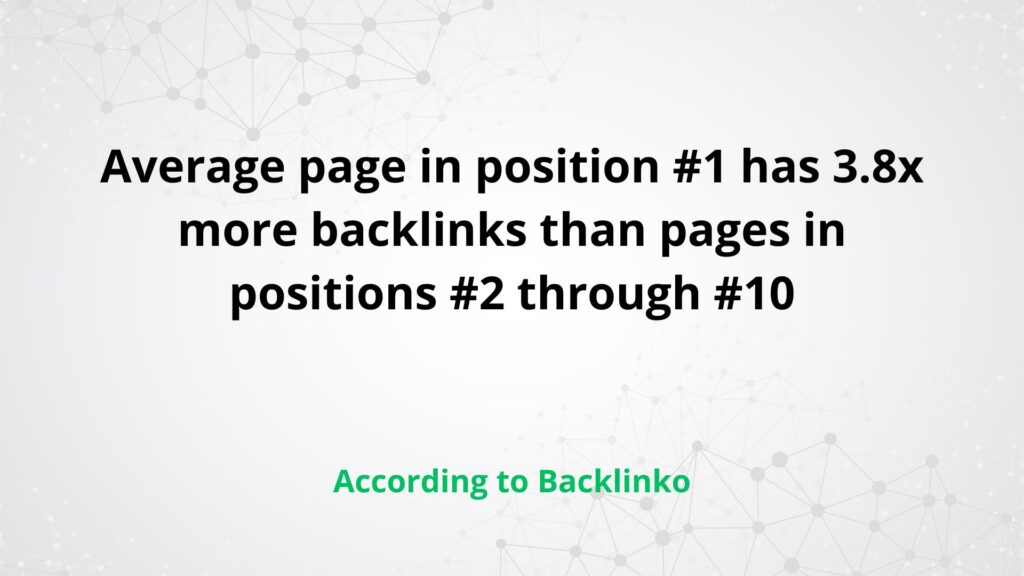
Backlinko’s analysis of search ranking factors found that the average page in position #1 has 3.8x more backlinks than pages in positions #2 through #10. This gap shows that link authority still strongly separates top-ranking pages from the rest of the field.
This doesn’t mean backlinks are the only factor that matters. But it confirms that off-page signals remain one of the clearest differentiators between page one and everywhere else.
Is off-page SEO harder than on-page SEO?
In most cases, yes. On-page SEO is fully within your control. You can rewrite a title tag in minutes. Off-page SEO requires building relationships, earning mentions, and convincing other websites to link to you, a process that takes more time and depends on factors outside your direct control.
This is exactly why many small businesses underinvest here. On-page changes feel achievable. Off-page work feels uncertain. But the businesses that consistently rank well are usually the ones willing to put in this harder, slower work.
Off-page SEO also ties closely to Google’s E-E-A-T framework (Experience, Expertise, Authoritativeness, Trustworthiness). External signals like backlinks, brand mentions, and reviews all feed into how Google assesses your site’s authority and trustworthiness, separate from how well-written your content is.
The Priority Categories (Types) of Off-Page SEO
Off-page SEO isn’t a single tactic. It’s a collection of strategies, each playing a different role in building your website’s authority. Here are the main types you need to understand.
Backlinks: The Foundation
Backlinks remain the most influential off-page signal. Not all backlinks carry equal weight, a link from a relevant, authoritative website matters far more than dozens of low-quality links. For example, a backlink from a respected industry publication signals far more trust to Google than one from an unrelated directory site.
Link Building Strategies
Beyond backlinks themselves, you need active strategies to earn them. This includes broken link building, resource page outreach, and content-based link earning. Each method has different time investments and success rates.
Guest Posting
Guest posting remains one of the most accessible link building methods for small businesses, but it requires a careful approach. Done poorly, it can look spammy to Google. Done well, it builds genuine relationships and earns relevant, contextual backlinks.
Domain Authority and Link Relevance
Not every high-authority website is a good link source. A backlink from a high-authority site in an unrelated industry carries less value than a link from a moderately authoritative site within your niche.
Anchor Text Strategy
The clickable text in a backlink, known as anchor text, sends signals to Google about what your page is about. Over-optimizing anchor text with exact-match keywords can look manipulative and risk a penalty.
Digital PR, HARO, and Brand Mentions
Earning mentions in news articles, industry publications, or expert roundups builds both authority and brand visibility. Services connecting journalists with expert sources make this more accessible for small businesses than ever before.
Social Signals and User-Generated Content
While social shares aren’t a direct ranking factor, they influence content distribution, brand visibility, and the likelihood of earning organic backlinks. User reviews and testimonials add another layer of trust signals.
Risky Practices to Avoid
Not every off-page tactic is worth pursuing. Private blog networks, link exchanges, and spam directory submissions can trigger Google penalties that take months or years to recover from.
Common Off-Page SEO Mistakes
Even businesses that understand off-page SEO often fall into the same traps. Here are the mistakes that do the most damage.
Chasing quantity over quality
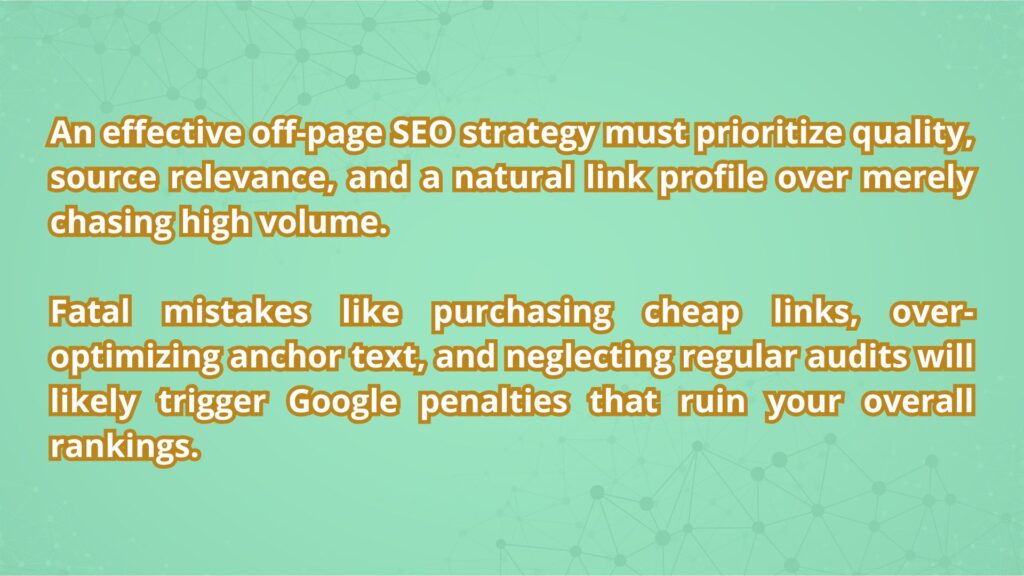
Many business owners assume more backlinks automatically means better rankings. In reality, ten relevant, authoritative backlinks outperform a hundred low-quality ones. Quality should always come before volume.
Buying backlinks from cheap marketplaces
Paid link schemes promise fast results, but Google actively penalizes detectable link buying. The short-term gain rarely justifies the long-term risk of losing your rankings entirely.
Ignoring source relevance
A backlink only helps if it comes from a website connected to your industry or audience. Links from unrelated niches add little value and can sometimes look suspicious to Google.
Over-optimizing anchor text
Using exact-match keywords as anchor text too frequently creates an unnatural link profile. Google’s algorithms are built to detect this pattern, and it can trigger a manual action or algorithmic penalty.
Never auditing your backlink profile
Toxic or spammy backlinks can accumulate over time, sometimes without your knowledge. Without regular audits, harmful links go unnoticed until they start dragging your rankings down.
How Long Does Off-Page SEO Take to Work?
Off-page SEO doesn’t deliver overnight results, and setting the right expectations from the start prevents frustration later.
New backlinks typically need time before Google crawls and indexes them. Once indexed, it can take several more weeks before their impact on rankings becomes visible. For most small businesses, meaningful movement in search positions takes around three to six months.
This timeline depends on several factors. Highly competitive keywords take longer to move than niche, low-competition terms. A website with little existing authority will also need more time than one that already has a solid backlink foundation.
Patience matters here. Businesses that expect immediate results often abandon off-page efforts too early, right before the strategy starts paying off.
Quick-Start Off-Page SEO Checklist
If you’re starting from scratch, use this checklist to prioritise your first off-page SEO efforts.
- Audit your existing backlink profile. Use a tool like Google Search Console or Ahrefs to see which sites already link to you, and identify any toxic links worth disavowing.
- Identify 10 relevant websites in your niche. Look for sites your target customers already trust, these become your first link building targets.
- Create one genuinely link-worthy asset. This could be original data, a comprehensive guide, or a free tool. Without something worth linking to, outreach becomes much harder.
- Start with guest posting on relevant publications. This remains one of the most accessible ways for small businesses to earn their first quality backlinks.
- Set up Google Alerts for your brand name. This helps you catch unlinked mentions you can later turn into backlinks.
- Review your backlink profile monthly. Off-page SEO isn’t a one-time task, ongoing monitoring keeps your link profile healthy.
Conclusion
Off-page SEO determines whether Google trusts your website enough to rank it above competitors. While on-page SEO lays the foundation, off-page signals, particularly backlinks, brand mentions, and digital PR, are what convince Google your site deserves authority.
The strategies covered in this guide work best when applied consistently rather than as one-off tactics. Start with the priority categories most relevant to your current situation, then explore each cluster article below for a deeper, step-by-step breakdown.
Building genuine authority takes time, but it’s time well spent. Every quality backlink and authentic brand mention compounds, making your next piece of content easier to rank than the last.
If you’d rather have an experienced team handle your off-page SEO strategy, Rhasko Digital can audit your current backlink profile and build a customized link building plan for your business. [Get in touch for a free SEO audit →]