


Imagine attracting loyal customers without spending a fortune on paid ads. Instead, they come to you—because your content speaks directly to their needs and interests. That’s the power of strategic content marketing.
In simple terms, content in marketing refers to valuable, relevant, and consistent information created to attract and retain a clearly defined audience. It goes beyond direct selling—it’s about offering real value through blogs, videos, guides, social media, and more.
Why Content Marketing Matters?
This article will help you understand why content marketing has become essential in today’s digital landscape. We’ll walk you through its core benefits, how a solid content marketing strategy works, and how it directly contributes to boosting your organic traffic. Whether you’re a startup or an established business, you’ll discover how creating high-quality content can strengthen your brand, build trust, and drive consistent growth without relying on constant ad spend.
Instead of shouting louder than your competitors, content marketing allows you to communicate smarter. It’s about solving your audience’s problems, answering their questions, and building a long-term relationship—one piece of content at a time.
What Is Content Marketing?
Full Definition
Content marketing is a strategic approach to creating and distributing valuable, relevant content to attract and retain a clearly defined audience—with the ultimate goal of driving profitable customer action.
It’s not just about producing content for the sake of it. It’s about aligning that content with your audience’s needs and business goals. Instead of pushing a product, content marketing pulls people in by offering insights, solutions, and education that matter to them.
This approach is at the heart of many modern marketing efforts, especially in an era where buyers crave information and independence before making purchasing decisions.
Content Format Examples
To better understand how this works in practice, here are some common content marketing examples:
- Blog posts – Educational or problem-solving articles that rank on search engines and drive consistent traffic.
- Videos – Explainer videos, tutorials, or behind-the-scenes clips that connect with viewers on platforms like YouTube or social media.
- Infographics – Visually engaging ways to present statistics or processes.
- Podcasts – Audio content that builds trust and community.
- eBooks & case studies – In-depth resources that demonstrate thought leadership and real-world success.
Each format serves a unique purpose in a broader content marketing strategy, helping you reach different segments of your audience across various platforms.
How It Differs from Traditional Ads
The main difference between content marketing and traditional advertising lies in the intent. Traditional ads interrupt and push a sales message. In contrast, content marketing educates, informs, and adds value—building trust over time. It doesn’t scream “buy now”; it asks, “how can we help?”
Key Takeaways:
- Content marketing involves providing consistent value, not just promotional material.
- A variety of content types—blog posts, videos, infographics—support different parts of your strategy.
- Unlike traditional ads, content marketing focuses on education and trust, not hard selling.
Why Content Marketing Is Important for Your Business
In a world saturated with ads, building a genuine connection with your audience has become more valuable than ever. That’s where content marketing stands out. Instead of interrupting your audience with sales pitches, it provides helpful, relevant information that draws them in. Here’s why it’s a crucial investment for any modern business.
Key Benefits of Content Marketing for Your Business
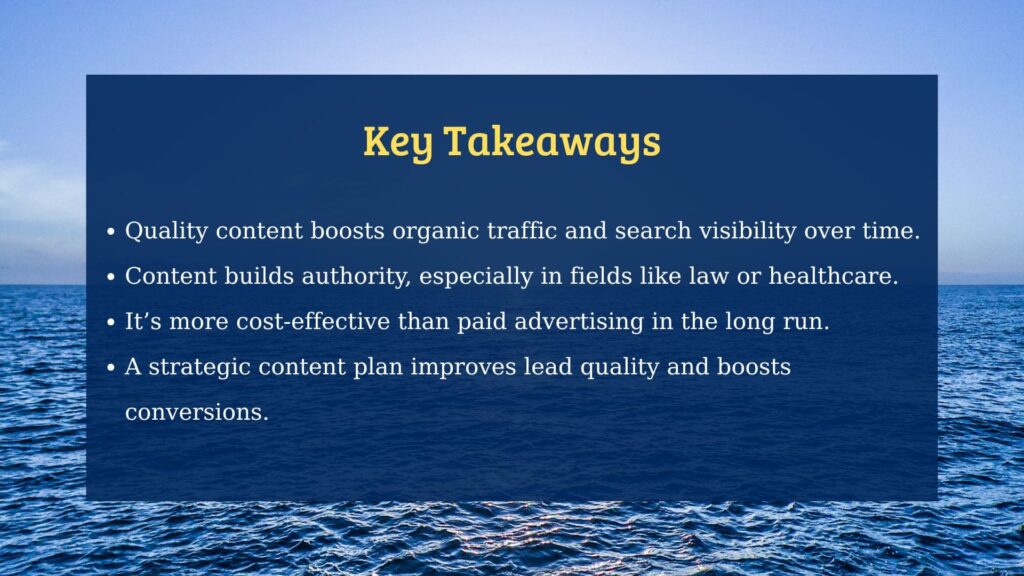
1. Increases Organic Traffic
High-quality content can significantly boost your visibility in search engines. When you consistently publish informative blog posts, how-to guides, or in-depth articles optimized for the right keywords, your site has a better chance of ranking on Google.
Unlike paid ads, which stop generating traffic once your budget runs out, content continues to attract organic traffic over time. In fact, evergreen content—content that stays relevant long-term—can bring in visitors for months or even years after it’s published. This makes content a more sustainable and scalable method of lead generation.
2. Builds Trust and Authority
People don’t just buy from brands—they buy from brands they trust. Creating content that addresses your audience’s questions and concerns helps establish your business as a go-to resource in your industry.
For example, content marketing for law firms often involves publishing legal insights, case breakdowns, or policy updates. By doing so, these firms demonstrate their expertise and reliability without directly selling their services.
This perceived authority often translates into better brand reputation, increased word-of-mouth referrals, and higher customer loyalty.
3. More Cost-Effective Than Paid Ads
While pay-per-click advertising can bring quick results, it’s not always sustainable—especially for small or growing businesses. In contrast, content is a long-term asset. One well-written article, video, or case study can continue to attract leads and nurture trust long after it’s published.
With a well-planned content marketing strategy, businesses can create a library of valuable assets that support their sales and SEO efforts with minimal recurring cost.
4. Drives Conversions
Content not only attracts visitors but also moves them through the buyer’s journey. According to industry research, businesses that publish content consistently—such as monthly blog posts or email newsletters—can achieve up to 6x higher conversion rates than those that don’t.
A thoughtful content marketing strategy guides users from awareness to decision-making with informative and persuasive content at every stage.
How to Get Started with Content Marketing (Content Marketing Strategy)
A successful content marketing strategy doesn’t happen by accident. It requires planning, consistency, and alignment with your business goals. Whether you’re aiming to build brand awareness or drive qualified leads, here are the essential steps to help you get started effectively.
Step-by-Step Guide
1. Define Your Goals and Audience
Before creating any content, get clear on your objectives. Are you trying to increase brand awareness, educate your audience, or generate more leads?
Understanding your target audience is equally critical. What problems are they facing? What type of content do they consume? Knowing who you’re speaking to will help you craft messaging that resonates and converts.
2. Create Consistent Content (Keyword: monthly business articles)
Consistency is more powerful than quantity. Instead of posting a flood of content in one month and going silent the next, focus on a steady publishing schedule—such as monthly business articles that address common pain points or answer relevant questions.
This regular cadence builds trust and keeps your brand top-of-mind without overwhelming your resources.
3. Optimize for SEO
Here’s where most businesses either thrive or fail. No matter how great your content is, it won’t be seen if it’s not optimized for search engines.
At SEO agencies like Rhasko Digital who specialize in Web SEO to ensure that your content not only reads well for humans but also ranks well on Google. This includes keyword research, on-page SEO, and optimizing content around high-value terms such as content marketing as a service.
Rhasko Digital helps businesses create content that drives results—turning blogs and service pages into organic lead magnets that work for you 24/7.
SEO isn’t just a technical checkbox—it’s the fuel that powers long-term content performance.
4. Distribute and Promote Your Content
Great content without distribution is like a billboard in the desert. Promote your content across multiple channels to reach your audience where they are. This can include:
- Social media (LinkedIn, Facebook, Instagram)
- Email newsletters
- Guest posts and partnerships
Distribution ensures your investment in content creation actually reaches and engages the right people.
Key Takeaways:
- Every content plan starts with clear goals and an audience profile.
- Consistency, such as monthly business articles, builds credibility and SEO value.
- SEO is essential—Rhasko Digital can help optimize your strategy for long-term success.
- Promoting your content is just as important as creating it.

Conclusion
Content marketing isn’t just about creating content—it’s about delivering value to your audience while driving sustainable business growth. From boosting your visibility in search engines to building long-term trust and authority, content marketing offers a powerful, cost-effective alternative to traditional advertising.
By developing a clear content marketing strategy, consistently publishing relevant content, and optimizing everything for SEO, you can attract quality leads, convert them into customers, and position your brand as a trusted industry leader. Whether you’re a small business, a growing law firm, or an eCommerce brand, content is the engine that fuels meaningful connections.
Ready to start? Plan your content strategy today and watch your organic traffic soar!
Need help with SEO or building your strategy? Rhasko Digital is here to guide you every step of the way.
Send Email to info@rhaskodigital.com